Details
DRM: Digitales Wasserzeichen
Weitere Details
1. Auflage 2019
07.02.2019
English
12.70 MB
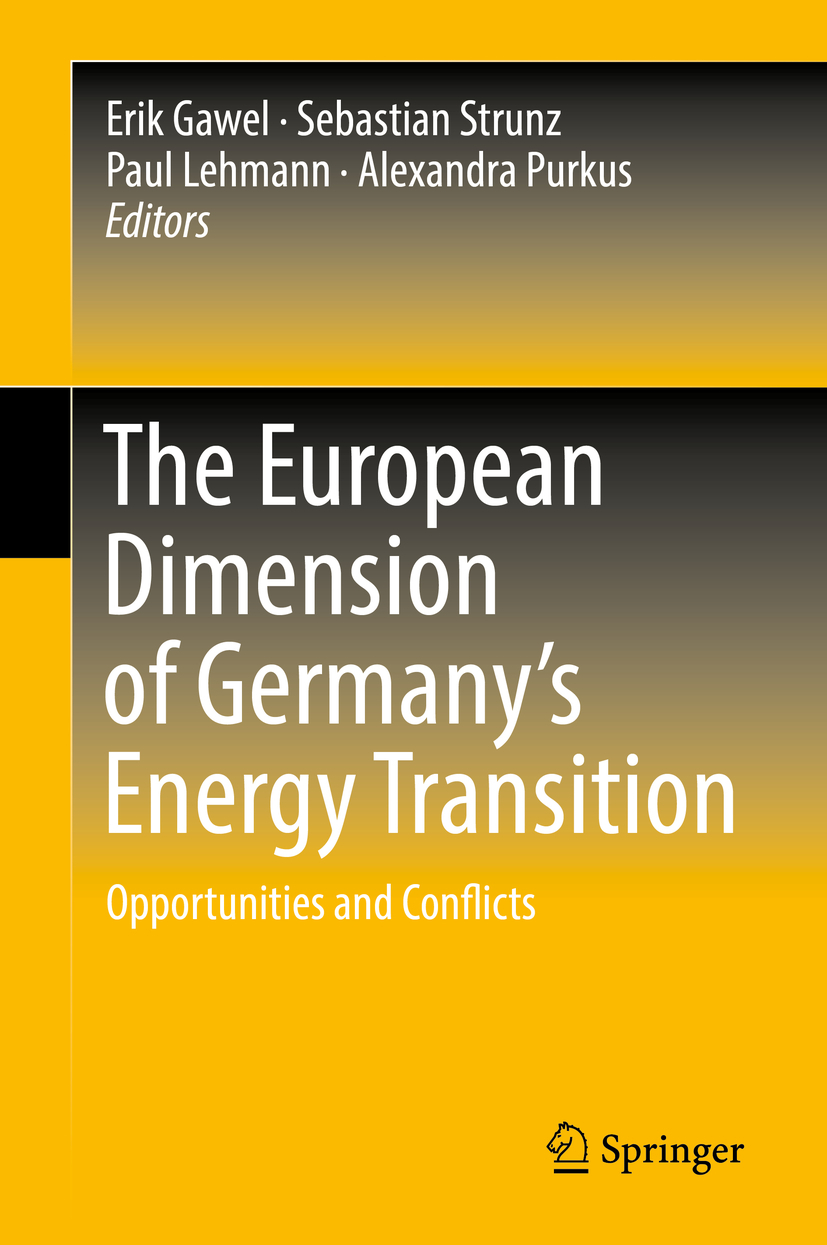
The European Dimension of Germany's Energy Transition
eBook - Opportunities and Conflicts, Energy (R0)
Beschreibung
This book addresses the interactions between Germanys energy transition and the EUs energy policy framework. It seeks to analyze the manifold connections between the prospects of the proclaimed Energy Union and the future of Germanys energy transition, and identifies relevant lessons for the transformation at the EU level that can be learned from the case of Germany, as a first-mover of transforming energy systems towards renewables. The various repercussions (political, economic and systemic) from the national transition are explored within the EU context as it responds to the German transition, taking into account both existing frictions and potential synergies between predominantly national sustainability policies and the EUs push towards harmonized policies within a common market. The books overall aim is to identify the most critical issues, in order to avoid pitfalls and capitalize on opportunities.
Über Erik Gawel, Sebastian Strunz, Paul Lehmann
Erik Gawel is Full Professor of Economics, esp. Environmental Institutional Economics, and Director of the Institute for Infrastructure and Resources Management at Leipzig University, Germany. He is also heading the Department of Economics at the Helmholtz Centre for Environmental Research ¿ UFZ in Leipzig. He graduated from Cologne University with diploma and PhD in economics. He was Visiting Professor in the Postgraduate Programme of the German Research Foundation (DFG) "Risk Regulation and System of Civil Law" (Bremen University) and habilitated at Augsburg University, Germany. He was scholarship-holder of the German National Academic Foundation, the DFG and Max Planck Society. He is, i.a., member of the European Academy of Sciences and Arts and academic editor of the journal "energies". His main areas of research are environmental and energy economics, new institutional economics, esp. law and economics, as well as public finance.
Sebastian Strunz is a postdoctoral researcher at the Department of Economics at the Helmholtz Centre for Environmental Research ¿ UFZ in Leipzig. His main research deals with the politico-economic conditions of sustainability transitions, with a particular focus on Germany¿s energy transition in the European context. Before joining the UFZ, he earned a PhD in sustainability economics at the Leuphana University in Lüneburg and a Magister Artium in economics and political science at the University of Heidelberg. His further research areas include the conceptual foundations of sustainability economics and the methodology of transition research.
Paul Lehmann heads a junior research group at the Faculty of Economics and Management Science at the University of Leipzig. He is also a guest researcher at the Department of Economics at the Helmholtz Centre for Environmental Research ¿ UFZ in Leipzig. Previously, he was a post-doctoral researcher at UFZ and spent research visits at Resources for the Future (RFF), Washington, DC, and the University of Oxford. He holds a Diploma in Business Administration from the University of Leipzig and PhD in Economics from the Martin-Luther-University Halle-Wittenberg. He is interested in the economic analysis of policy instruments in the fields of climate, energy and water policy. His junior research group investigates policy strategies to mitigate ecological trade-offs related to the deployment of renewable energies.
Alexandra Purkus is a postdoctoral researcher at the Department of Economics at the Helmholtz Centre for Environmental Research ¿ UFZ in Leipzig. Her work focusses on the interplay between climate and energy policy and sustainable land use, particularly in the context of renewable resource und energy use. She holds a PhD in Economics from the University of Leipzig, a Diploma in Economics with an Environmental Focus from the Carl von Ossietzky University Oldenburg, and a Master of Science by Research in Global Environmental Change from the University of Edinburgh. In her doctoral thesis, she investigated German and European bioenergy policy from a new institutional economics perspective, as part of an interdisciplinary working group on bioenergy systems analysis at the UFZ. Further research interests include environmental, ecological and innovation economics.
Inhalt
E-Book Informationen
Alle hier erworbenen E-Books können Sie in Ihrem Kundenkonto in die kostenlose PocketBook Cloud laden. Dadurch haben Sie den Vorteil, dass Sie von Ihrem PocketBook E-Reader, Ihrem Smartphone, Tablet und PC jederzeit auf Ihre gekauften und bereits vorhandenen E-Books Zugriff haben.
Um die PocketBook Cloud zu aktivieren, loggen Sie sich bitte in Ihrem Kundenkonto ein und gehen dort in den Bereich „Downloads“. Setzen Sie hier einen Haken bei „Neue E-Book-Käufe automatisch zu meiner Cloud hinzufügen.“. Dadurch wird ein PocketBook Cloud Konto für Sie angelegt. Die Zugangsdaten sind dabei dieselben wie in diesem Webshop.
Weitere Informationen zur PocketBook Cloud finden Sie unter www.meinpocketbook.de.
Allgemeine E-Book-Informationen
E-Books in diesem Webshop können in den Dateiformaten EPUB und PDF vorliegen und können ggf. mit einem Kopierschutz versehen sein. Sie finden die entsprechenden Informationen in der Detailansicht des jeweiligen Titels.
E-Books ohne Kopierschutz oder mit einem digitalen Wasserzeichen können Sie problemlos auf Ihr Gerät übertragen. Sie müssen lediglich die Kompatibilität mit Ihrem Gerät prüfen.
Um E-Books, die mit Adobe DRM geschützt sind, auf Ihr Lesegerät zu übertragen, benötigen Sie zusätzlich eine Adobe ID und die kostenlose Software Adobe® Digital Editions, wo Sie Ihre Adobe ID hinterlegen müssen. Beim Herunterladen eines mit Adobe DRM geschützten E-Books erhalten Sie zunächst eine .acsm-Datei, die Sie in Adobe® Digital Editions öffnen müssen. Durch diesen Prozess wird das E-Book mit Ihrer Adobe-ID verknüpft und in Adobe® Digital Editions geöffnet.
Bei E-Books, die mit Readium LCP geschützt sind, erscheint bei dem ersten Öffnen auf ihrem Reader ein Hinweisfenster mit der Aufforderung ein Passwort einzugeben. Gleichzeitig öffnet sich ein Infofeld, in dem das Passwort steht. Tragen Sie dieses Passwort in das Eingabefeld ein und bestätigen Sie die Eingabe. Danach öffnet sich das E-Book automatisch.
Um E-Books, die mit Readium LCP geschützt sind, auf einem Tablet/Laptop/Smartphone lesen zu können, benötigen Sie ein Programm, das in der Lage ist, mit diesem Kopierschutz umzugehen. Das ist z.B. der Thorium Reader (Windows, Mac, Linus) oder die PocketBook App /iOS, Android). Fügen Sie das heruntergeladene E-Book in das Programm ein. Bei dem ersten Öffnen erscheint ein Hinweisfenster mit der Aufforderung ein Passwort einzugeben. Gleichzeitig öffnet sich ein Infofeld, in dem das Passwort steht. Tragen Sie dieses Passwort in das Eingabefeld ein und bestätigen Sie die Eingabe. Danach öffnet sich das E-Book automatisch.